
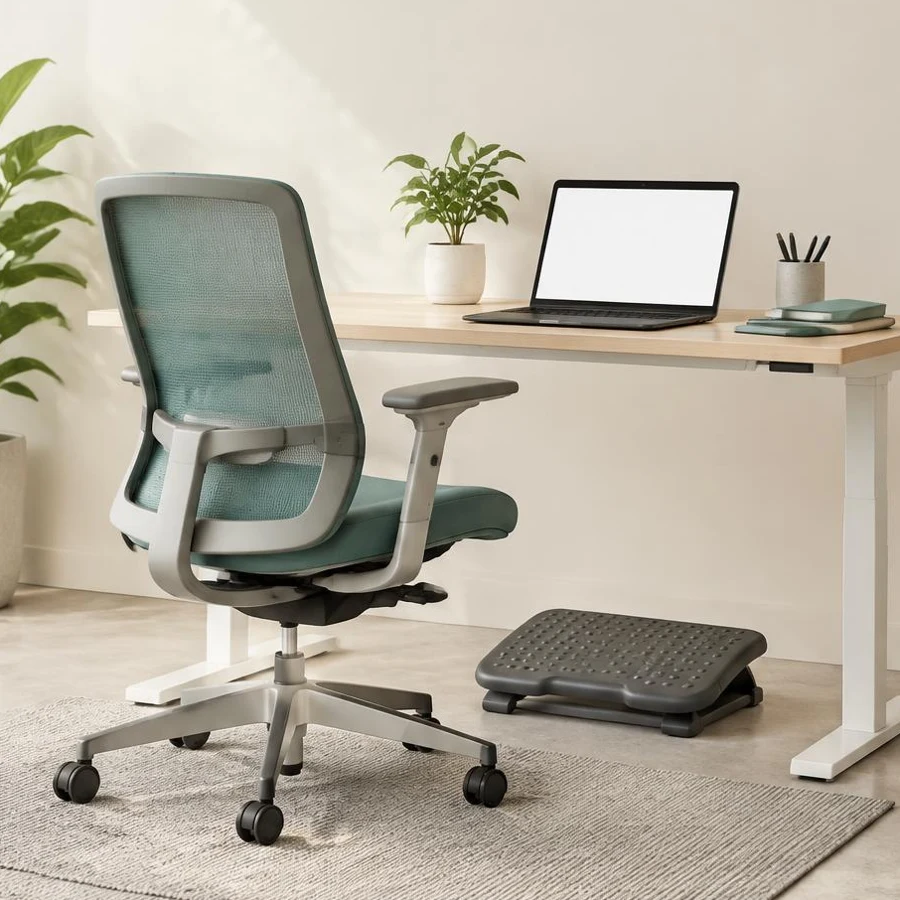
A return to desk work after an auto injury should be based on your ability to sit, move, concentrate, and complete tasks safely. Ask your treating clinician about temporary restrictions and gradual changes rather than assuming a desk job is physically effortless.
Educational information from NJ Pain and Injury Center. This article is not a diagnosis, individualized treatment advice, or emergency care. Treatment and return-to-activity decisions require an appropriate clinical assessment.
In this article
- Why can desk work still be demanding?
- What adjustments are worth discussing?
- How do you build a workable pacing plan?
- What should happen if work keeps aggravating symptoms?
Why can desk work still be demanding?
A computer day combines prolonged sitting, repeated reaching, phone use, and commuting. Neck or back symptoms may become noticeable even when there is no heavy lifting. If a head injury is possible, attention problems, dizziness, and fatigue also deserve medical evaluation.
Describe a real workday at your visit, including the commute and whether you can change position. Your therapist needs those details to help translate examination findings into useful activity goals.
What adjustments are worth discussing?
Consider a supported chair, a screen position that does not require repeated twisting, and frequently used items within easy reach. The best setup lets you vary your position instead of locking you into one supposedly perfect posture all day.
Ask your employer about changes your clinician recommends, such as a gradual schedule, lighter duties, or opportunities to move. These are requests to discuss, not a promise of accommodations or a legal opinion about your workplace.
How do you build a workable pacing plan?
Use your current sitting tolerance as a starting point. Schedule changes of position before a long period becomes overwhelming, following your clinician’s advice. Standing continuously is not necessarily better than sitting continuously; a mix of tolerable activities may be more practical.
Keep prescribed exercises separate from work multitasking. Rushed stretching while answering messages can turn a carefully selected movement into an uncomfortable one. Report any symptoms that remain worse after the day rather than silently pushing through.
What should happen if work keeps aggravating symptoms?
Bring a short activity record to follow-up: tasks, duration, symptom location, and recovery afterward. Ask whether the plan or work restrictions need updating. A systematic review of crash-related musculoskeletal injuries found potential benefits for work outcomes, but it does not predict an individual return date.
NJ Pain and Injury Center provides physical therapy for injury recovery. The aim is an individualized progression toward your actual duties, with medical reassessment if new weakness, persistent dizziness, or worsening symptoms suggest a different problem.
Common questions
Is a standing desk the answer to post-crash pain?
Not necessarily. Varying position and matching activity to your tolerance may be more useful than replacing all sitting with standing.
Can a therapist tell me when to resume full duties?
Your care team can assess function and discuss restrictions. Return-to-work decisions should also account for your diagnosis, job demands, and employer requirements.
Discuss your recovery with the clinic
Explore physical therapy and choose the office that works for your travel needs. Confirm appointment availability and coverage directly; no specific recovery result is guaranteed.
- Englewood Spine & Injury Center
- Totowa Spine & Injury Center
- Bergen Pain & Injury Center in Hackensack
- Hudson Injury Center in West New York
- Newark Injury Center
Related reading
- Your First Physical Therapy Visit After a Car Accident: What to Bring
- Walking After a Car Accident Injury: How to Discuss a Safe Starting Point