
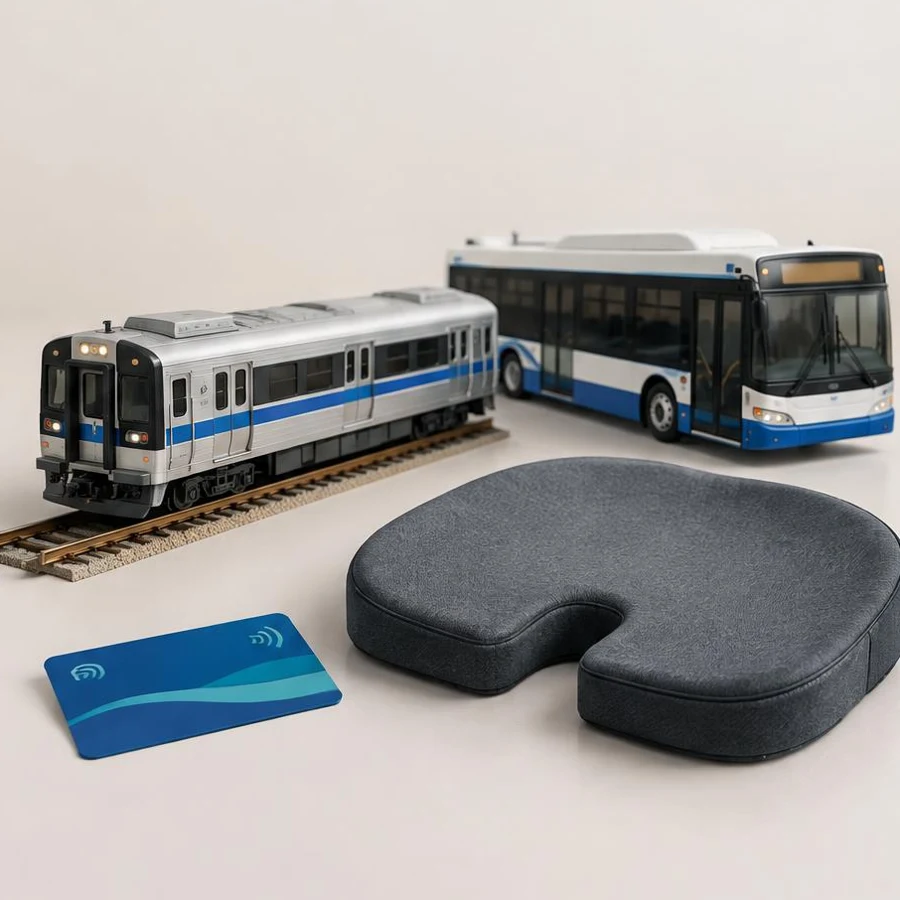
If your commute aggravates neck or back pain, treat it as part of your daily activity load. Review sitting tolerance, transfers, bags, and driving safety with your clinician; there is no universal posture change that fixes every injury.
Educational information from NJ Pain and Injury Center. This article is not a diagnosis, individualized treatment advice, or emergency care. Treatment and return-to-activity decisions require an appropriate clinical assessment.
In this article
- Why include the journey in your recovery plan?
- What can you discuss about seated travel?
- What about driving and carrying bags?
- How should you respond if commuting keeps setting you back?
Why include the journey in your recovery plan?
A workday starts before you reach the desk. Driving, standing on a bus, using stairs, and carrying a laptop all contribute to the movement demands you face. Describe your full route at your appointment, including whether you can sit or change position.
North Jersey patients may travel between towns for work and treatment. Do not assume pain caused during the journey proves a particular spinal diagnosis. Your history and examination are needed to understand what is limiting you.
What can you discuss about seated travel?
Ask about a comfortable supported position and ways to avoid holding one posture for an entire trip. Seat adjustments should happen before driving. If a position causes radiating pain, numbness, or dizziness, report it rather than repeatedly forcing yourself to tolerate it.
For passengers, changing position or taking a movement break when possible may be useful if allowed by the care plan. Never stretch or stand in a way that creates a fall risk on a moving vehicle.
What about driving and carrying bags?
Restricted head turning, medication-related drowsiness, or trouble concentrating can make driving unsafe even if sitting is tolerable. Ask your treating clinician about readiness and arrange another way to travel when necessary.
Reduce unnecessary loads and ask for help if carrying is restricted. Explain to the therapist whether you lift bags from a trunk, climb station stairs, or stand holding a rail. Task-specific questions are more useful than general advice to improve posture.
How should you respond if commuting keeps setting you back?
Record which part of the trip provokes symptoms and whether they settle afterward. Bring the pattern to follow-up so your clinician can review the activity dose, treatment goals, or need for reassessment.
NJ Pain and Injury Center has actual offices in Totowa, Hackensack, West New York, Newark, and Englewood. Choose based on travel and office availability, not an assumption that a service-area town has its own location. New weakness, major balance changes, or emergency spinal symptoms require medical attention rather than a commuting adjustment.
Common questions
Is public transportation always better than driving during recovery?
No. Sitting, standing, stairs, and carrying loads can all be challenging. Choose transportation that matches your abilities and medical advice.
Can posture changes replace treatment?
They may improve comfort, but they do not diagnose an injury or replace assessment for persistent or worsening symptoms.
Discuss your recovery with the clinic
Explore physical therapy and choose the office that works for your travel needs. Confirm appointment availability and coverage directly; no specific recovery result is guaranteed.
- Englewood Spine & Injury Center
- Totowa Spine & Injury Center
- Bergen Pain & Injury Center in Hackensack
- Hudson Injury Center in West New York
- Newark Injury Center
Related reading
- Back to School After a Car Accident Injury: A Family Planning Guide
- Returning to the Gym After an Auto Injury: What to Review First